Diary /
No Wrong Turn
Date /
November 17, 2025

No Wrong Turn is my ongoing travel diary—as a KAX senior consultant, former expat, recent empty-nester, compression sock devotee, and proud breast cancer survivor. This isn’t a list of must-dos or scathing reviews. It’s just me, writing about the joyful, messy, occasionally chaotic magic of saying yes to more travel. Thanks for coming along. xoxo, Heather
There’s something about Morocco that grabs you from the moment you arrive—the color, the rhythm, the light. It’s a place that doesn’t just welcome you in, it envelops you.
One of the best parts of working at KAX? When someone from the team returns from a destination and shares the details on a team call, I usually hang up… and immediately text Jordan: “Sooo, I have an idea.” No explanation needed—he knows we’re about to pack a bag.
That’s exactly how this trip to Morocco began. Kyle had just gotten back, and the way he described it stuck with me. Something about the place wouldn’t let go, and eventually, I stopped trying to resist.
The bright blue skies against the rose-colored walls of Marrakech, the textures of hand-laid tile, weathered wood, soft rugs, polished brass, and the call to prayer echoing through the city—it all made the place feel cinematic, like you were walking through a story instead of reading one.
And as everyone has come to learn… I am not usually at a loss for words. But trying to capture the vibe of this place? Nearly impossible. The smells alone deserve their own post. Orange blossom drifting through the air, the earthiness of spices in the souks, charcoal smoke rising from street vendors at dusk. Every moment hits all five senses.
But it’s the people who stay with you. The hospitality here is real—not customer service, but something deeper. Within five minutes of meeting someone, you’re offered a seat, a story, and of course, mint tea. Time slows down. Conversations stretch. You learn how people live, what they care about, and how much joy is found in sharing something simple.
Morocco is layered. It’s bold. It’s gentle.
I’ve shared the full story on my blog (link in bio)—where we stayed, what made it exceptional, and the subtle details that turned a beautiful destination into something deeply personal.
P.S. Don’t miss the guest entry: my husband’s honest take on his first-ever Hammam experience. He has thoughts. Lots of them!
A Quick, but Well-Deserved, Thank You
As many of you know, one of KAX’s real superpowers is that they actually spend extended time in the places they send people. They walk the neighborhoods, feel the rhythms, meet the right people—and that changes everything. In Morocco, that person was Aicha Moukhlis, a trusted local partner. She was wise and knowledgeable eyes, ears, and steady hand on the ground, answering our questions in real time (like, actual minutes). It’s that kind of local connection that makes a trip feel less like travel and more like being exactly where you’re meant to be.
Royal Mansour, Marrakech: The Palace Built by a King (Literally)
Let’s just start here: Royal Mansour wasn’t inspired by a palace—it is one. Commissioned by His Majesty King Mohammed VI of Morocco and built by the Moroccan government, this hotel was designed to showcase the country’s finest craftsmanship, architecture, and hospitality. In other words, it’s Morocco flexing.
Opened in 2010, Royal Mansour is more than a luxury stay, it’s a statement. The King wanted to create a property that would both honor Moroccan heritage and set a new standard for hospitality worldwide. So he brought in over 1,500 artisans, each one trained in traditional techniques—from zellige tile to tadelakt plasterwork and carved cedar wood, and had them build this place by hand. Every. Single. Detail.
And trust me, you feel it the moment you step through the gates.
A Royal Welcome Just Minutes From the Airport
Royal Mansour is only a fifteen-minute drive from the Marrakech Menara Airport, but once you’re inside the walls, you may as well be in another world. Think quiet cobblestone paths that wind past tangerine trees and palm groves (yes, real ones), punctuated by fountains and arched walkways.
At the heart of the property is an open-air central lobby, wrapped in intricate latticework and filled with plush Moroccan seating, traditional lanterns, and the scent of cedar and rose water. During the day, it’s bright and breezy. At night, it turns into a glowing salon with soft music and a bar that would make Hemingway sit up straighter.
Rooms: Actually, Private Riads
Forget the idea of a traditional hotel room. Here, you stay in a private riad—a multi-level Moroccan home with its own courtyard and rooftop terrace. Each of the 53 riads features a rooftop plunge pool, private terrace for breakfast and nightcaps, and discreet underground service tunnels so staff are never intrusive.
Guest Post: My Husband Jordan on Experiencing (and Maybe Loving) the Hammam
When my wife told me we were doing a hammam at the Royal Mansour, I figured it was just another spa thing. You know, towels, tea, whispering. I’ve done an Ironman, I can handle a steam room.
Turns out, this was less “spa” and more “ritual cleansing that dates back to the dawn of civilization.” I did some quick reading beforehand, because apparently I do homework now, and learned that the Moroccan hammam originated as a religious purification practice. Over time, it became more of a weekly routine, a full-body reset that people take pretty seriously.
At Royal Mansour, though, it’s a little… elevated. This isn’t your neighborhood steam room with a bench and a garden hose. The place is made of marble, glowing like a spaceship, and I was handed a pair of paper boxers that did not inspire confidence.
From there, things escalated. I was guided into a massive steam room, lay flat on a heated slab, and was scrubbed by a woman with the focus of a surgeon and the arm strength of a bouncer.
There’s a rhythm to it: steaming, scrubbing, rinsing, repeat. At one point, they were pouring buckets of warm water over me like I was the guest of honor in a very luxurious car wash. It was weirdly meditative. If the experience had a soundtrack, it would’ve been Pink Floyd’s Echoes, no lyrics, just long instrumental stretches and occasional moments where you’re not sure what planet you’re on.
I left that room feeling cleaner than I’ve ever been. Not quite “washed my hands and sealed my fate” clean, but close. (That’s a Rolling Stones lyric, for anyone keeping score.) My skin has never been this smooth, and I say that with only a little shame.
Would I do it again? Yes. Would I admit to enjoying it? Apparently, I just did.
Our Last Night: A Dinner to Remember
The hotel’s signature Moroccan restaurant, La Grande Table Marocaine, is as regal as it sounds. Originally developed in collaboration with three-Michelin-star chef Yannick Alléno, it remains one of the most lauded Moroccan dining rooms in the world. The menu is deeply traditional, with dishes like chicken tagine with preserved lemon and olives, saffron couscous, and lamb shoulder cooked for twelve hours.
But it’s the room itself that steals the show—plush velvet banquettes, chandeliers, and servers dressed in traditional Moroccan attire. It feels like a dinner party hosted by a royal aunt you never knew you had.
The Location: Both Worlds in One Stay
Royal Mansour is right between the old medina and the more modern Gueliz neighborhood. You can walk to the souks and Jemaa el-Fnaa square in one direction, or head the other way for new restaurants, boutiques, and museums.
It’s positioned perfectly for travelers who want authenticity with a touch of ease.
Bottom Line: Royal Mansour isn’t just a hotel—it’s Morocco’s masterclass in hospitality. Every inch of it whispers intention, elegance, and centuries of craft. You’re not checking into a place to stay—you’re stepping into a living gallery curated by a king. It’s wildly luxurious, yes, but also personal, precise, and deeply tied to place. If you want to feel like royalty with a sense of story, this is it.
{gallery}
What to Do in Marrakech (Beyond the Guidebook)
The Real MVP of Marrakech
Let’s talk about the MVP of our Marrakech sightseeing adventure: Abdelouarit Nait Ouahmaan (Abdel). Officially, a guide picked especially for us via KAX, unofficially now part of our group text thread. From the second we met him, he read our group like a seasoned pro. One glance at our little travel pod—my husband Jordan and I plus our friends Maryann and Greg, and he just got it.
Instant Travel Chemistry
This was our first time traveling with Maryann and Greg, but somehow Abdel made it feel like we’d all been doing trips together for years. He knew exactly how to balance the group energy. Within minutes, he clocked that Greg and Jordan—both Ironman competitors—are not exactly museum lingerers. They’re action-first guys. The kind who want to be in it—chatting with locals, wandering off-route, discovering great food, and seeking out shops that feel more like hidden gems than tourist traps.
A Custom Tour for the Action Guys
So Abdel gave them what I now call “the cultural highlights express,” peppered with just the right amount of history, storytelling, and, most importantly—shopping. Yes, the husbands were the shoppers. And Abdel leaned all the way in. He took them straight to the best souks, stalls, and hidden ateliers for real-deal Moroccan leather, handmade rugs, and traditional gourmet goods. He knew exactly who to ask and where to go. By the end of the day, the three of them were bouncing from shop to shop like a Marrakech boy band.
Meanwhile, We Were There for the Culture
Maryann and I were there for the architecture. The history. The slow walk through time. And Abdel delivered. He brought us to just the right spots in the medina and gave us enough context and history to bring it all to life—without the lecture-length explanations. He knew when to pause for a moment of meaning, and when to move it along. With him guiding us, the city felt intimate instead of overwhelming. The souks didn’t feel like chaos, they felt like chapters of a great book you didn’t want to skip.
{gallery2}
A Hidden Alley and a Slice of Real Life
We followed Abdel into the narrowest of alleyways, winding past rows of crumbling ochre walls, until we ducked down a flight of stairs. At the bottom? A communal bread oven—one of the oldest and most essential parts of Moroccan city life. Historically, families would prepare dough at home, then bring it to the local baker to be cooked. These bakers, known for their quiet presence and long memories, were often considered the neighborhood's matchmakers. They saw everything. They knew which family baked for how many, which households celebrated, who had guests, and who was alone. They were the quiet observers of daily life, knitting the fabric of the community together through bread. We tried a still-warm round pulled straight from the oven, and it was simple, salty, slightly chewy perfection. The kind of bread that ruins you for all other bread.
Scent, Spice, and That Elusive Orange Blossom
He also brought us into a traditional pharmacy where we didn’t just shop—we had a full sensory experience. We passed around jars of dried flowers and spices, learned about Moroccan oils like prickly pear, argan, and black cumin, and yes, all of us were on a personal mission to find that orange blossom scent that floats through the city like magic. Spoiler: we found it here. Greg, meanwhile, basically needed a second suitcase. Every time we turned around, he was discovering a new oil, spice, or serum he “absolutely couldn’t leave without.”
A Private Look at Moroccan Contemporary Art
One of the most unexpected highlights was a private visit to Loft Art Gallery, led by the incredibly gracious Malika Benarafa, who opened the doors for a quiet, curated tour. The gallery, which also has a presence in Casablanca, is a cornerstone of Morocco’s contemporary art scene—known for spotlighting both emerging and established North African artists. Housed in a sleek, minimalist space that contrasts beautifully with the medina's buzz outside, the gallery focuses on themes of identity, memory, and heritage through modern forms—painting, sculpture, and photography. Malika shared the stories behind the work and the artists, giving us insight into the evolving creative voice of Morocco today. It was calm, personal, and one of the few moments in the city that felt completely still.
Coffee, Palaces, and Seven Pastries
We also made a stop at Bacha Coffee, an institution that deserves its fame. Housed in the former Dar el Bacha palace, this coffee house is more than just beautiful (though yes, the tiled floors, brass accents, and arched doorways are worth the visit alone). It opened in 1910 and once hosted cultural icons and political figures from all over the world. The café honors that legacy with a menu of over 200 single-origin coffees, each presented like a fine wine.
We sat down for a cup, surrounded by a mix of locals and tourists, the quiet hum of a city steeped in history. Jordan, who was tasked with picking “one or two pastries” since we had just eaten breakfast, came back with a tray of seven. Seven! His sweet tooth is undefeated. The whole experience felt like a throwback to another era, slow, elegant, intentional, and just indulgent enough to feel like a vacation.
Hot Air Balloon Over Marrakech: Coffee with a View
There are a few moments in travel that hit pause on everything, and watching Marrakech wake up from a hot air balloon is one of them. To kick-off this adventure, we were picked up before sunrise and driven just outside Marrakech, where the landscape opens into the Al Haouz plains and stretches toward the base of the Atlas Mountains. After a quick safety room briefing, we boarded the balloon and lifted off just as the sky started to shift—soft light spilling across the horizon.
The views from above were quiet and vast. You can see the outlines of Berber villages that have stood for centuries, small farms, and stone walls marking land passed down through generations. In the distance, we flew near the town of Tameslouht, a place with deep Sufi roots, once a stop along old caravan trade routes.
There’s a main pilot on board who manages the flight, and an assistant who handles breakfast—served right there in the balloon. Somehow, while floating thousands of feet in the air, they managed to brew fresh drip Bacha Coffee and serve it with bread, yogurt, and fruit. Maryann and I couldn’t stop whispering about how that coffee even happened. Each of us had a few cups, so let’s just say we were both heavily caffeinated and very talkative on the drive back to the riad.
Even Jordan—who’s never been shy about his fear of heights—relaxed into it. It’s hard not to. The movement is slow and steady, and the silence up there does most of the work. It felt peaceful, simple, and unlike any other part of the trip. No noise—just a gentle breeze, sunrise, and the four of us quietly taking it all in.
{gallery4}
Kasbah Tamadot: A Mountain Escape from the City’s Buzz
About an hour and change from Marrakech—depending on how fast your driver takes the mountain curves—you’ll find yourself winding into the little village of Asni. Just past the weathered clay houses and hanging baskets of olives, the road tucks into the hillside and delivers you to Kasbah Tamadot, Sir Richard Branson’s perfectly dramatic retreat in the High Atlas Mountains. Traditionally, a kasbah was a fortified home for local leaders, built to withstand both time and terrain, and here, that spirit remains. Only now, instead of battlements and watchtowers, it’s velvet cushions, hand-carved doors, and views that stop conversation mid-sentence.
As for the other part of the hotel’s name—Tamadot, means “soft breeze” in Berber. And it fits. You feel it the moment you step onto your balcony: a hush of mountain air, laced with rose and olive, drifting in like a whisper. It’s the kind of stillness that doesn’t announce itself, but settles in gently, letting you know you’ve fully left the city behind.
A Little History
Before Branson turned it into a sanctuary of mountainside luxury, the property was the private home of Luciano Tempo, an Italian antiques dealer with a knack for collecting Moroccan art and furniture. His influence is still everywhere—in the carved cedar doors, handwoven textiles, and collection of vintage lanterns lighting the walkways at night. Branson discovered it during one of his ballooning adventures (obviously) and transformed it into one of the earliest and most iconic properties in his Virgin Limited Edition portfolio.
The Layout: Understated, Elevated
There are 28 rooms and suites, spread across the original kasbah and a series of Berber-style tents that dot the edge of the hilltop like something out of a dream. Each tent is quietly iconic. Set apart from the main building with sweeping, uninterrupted views of the valley, they come with private terraces, deep soaking tubs, and just enough space to feel indulgent without feeling staged. Some have hot tubs on the deck. All of them feel wildly private. It’s that kind of place.
The main kasbah itself has a series of courtyard-style suites and rooms that wrap around lush gardens, tiled pathways, and small fountains where birds sip water in the late morning sun.
{gallery3}
Mornings in the Mountains
Every morning starts in a large, plush Berber tent that’s part breakfast room, part communal daydream. Velvet cushions, dark wood tables, fireplaces that crackle even when it’s not cold. They serve msmen with honey and jam, eggs any way you want them, just-squeezed orange juice, and that endless cascade of mint tea that feels more like a ritual than a meal. Trust me, you’ll want to linger.
Days That Float By
There’s hiking for all levels, from easy walks just outside the hotel to longer climbs into the hills. You don’t need a guide to explore—several trails start right from the property and wind through terraced farmlands and olive groves. The four of us opted for the one just outside the hotel, and the time flew by as we fell into one of those rare, unhurried conversations—sharing how we met our spouses (mine had a mohawk!), the turns our professional lives have taken, and where we each find ourselves in this new life chapter. That said, guided hikes are available if you want to go deeper into the mountains or visit nearby Berber villages. The guides are locals who know these trails inside and out, and they’re great if you’re looking for more context or want someone to point out the history, plants, and way of life up here.
The pool, an infinity-edge slice of serenity, faces the peaks. There’s no music, just the sound of birds and wind. Order a cocktail from the bar and suddenly, three hours disappear. Around the corner, a small spa offers traditional Moroccan hammam rituals and massages using locally made argan oil.
We weren’t sure what to expect—the spa is tiny, almost hidden, and totally unassuming. But Maryann signed up for a morning massage on her own. She walked out an hour later looking completely transported, soft smile, glassy eyes, and that unmistakable post-massage haze. She called it one of the best massages of her life. The rest of us just took mental notes and promised ourselves we’d book next time we came back (which we hope is soon!).
Dinner in the Clouds
At some point, you’ll wander to the restaurant, which hovers above the valley like a terrace in the clouds. Dinner feels more like a slow ceremony—pastilla, grilled lamb, cinnamon-scented vegetables—and no rush to move on.
At Night
When the sun drops behind the peaks, the whole property starts to glow. Lanterns are lit. Fireplaces flicker. You might walk the paths just to hear the gravel under your feet and watch the sky turn from purple to black.
And when you finally make your way back to your tent, the air cooler now, it’s the kind of quiet you don’t realize you’ve been missing until it wraps around you.
Bottom Line: If you’re going to Marrakech, build in time here. Don’t treat it like a side trip. This is a reset. A deep breath. A shift in rhythm.
Dinner in the Clouds: Our Night at Alcimat
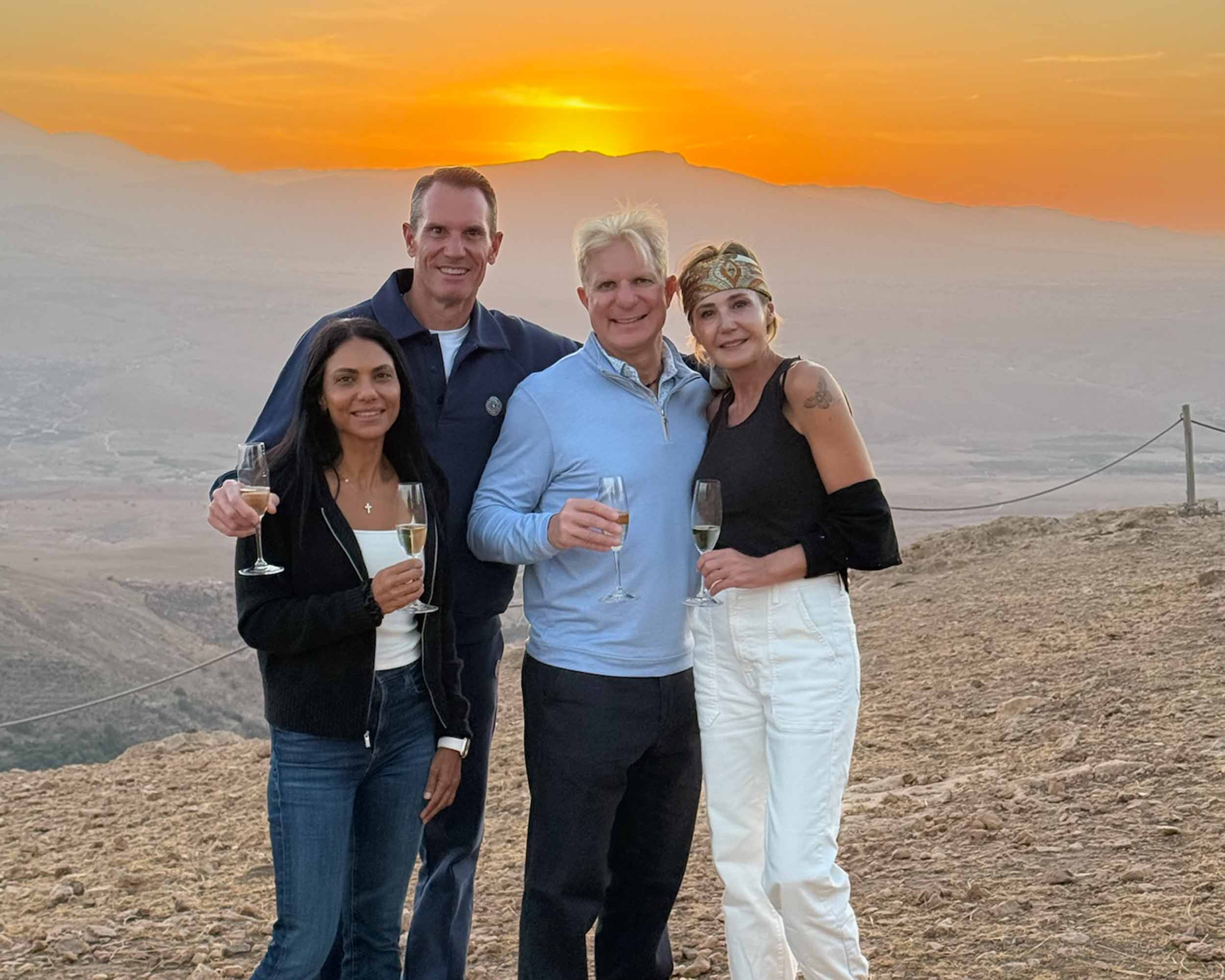
This is the kind of night that makes you believe in magic. After a 40-minute winding drive into the Atlas Mountains, we arrived at Alcimat just in time to watch the sun slip behind the ridgelines, casting a warm gold across the desert floor. Champagne was waiting (because obviously), along with trays of delicate canapés, including fresh fish and avocado lettuce wraps that quietly stole the show.
Alcimat isn’t just a dinner—it’s a collaboration. Run entirely by villagers from the surrounding community, everything you taste is grown, raised, or handmade nearby, down to the ceramic plates it's served on. There’s pride in every detail, and it shows.
Dinner was a multi-course dream, both deeply traditional and somehow completely personal. Spiced chicken and fall-apart lamb arrived with the most fragrant couscous I’ve ever tasted. The flavors were layered, warming, and quietly bold. And dessert? Rice pudding, one of my all-time favorites, served just the way it should be: barely sweet, perfectly creamy, and exactly what you didn’t know you needed.
What made the night unforgettable wasn’t just the view or the food—it was the quiet grace of the people hosting us. Every gesture was thoughtful, every moment unhurried. You could feel how much it meant to them to share this place, and being welcomed into it felt like a rare kind of privilege.
{gallery5}


