Diary /
No Wrong Turn
Date /
July 11, 2025
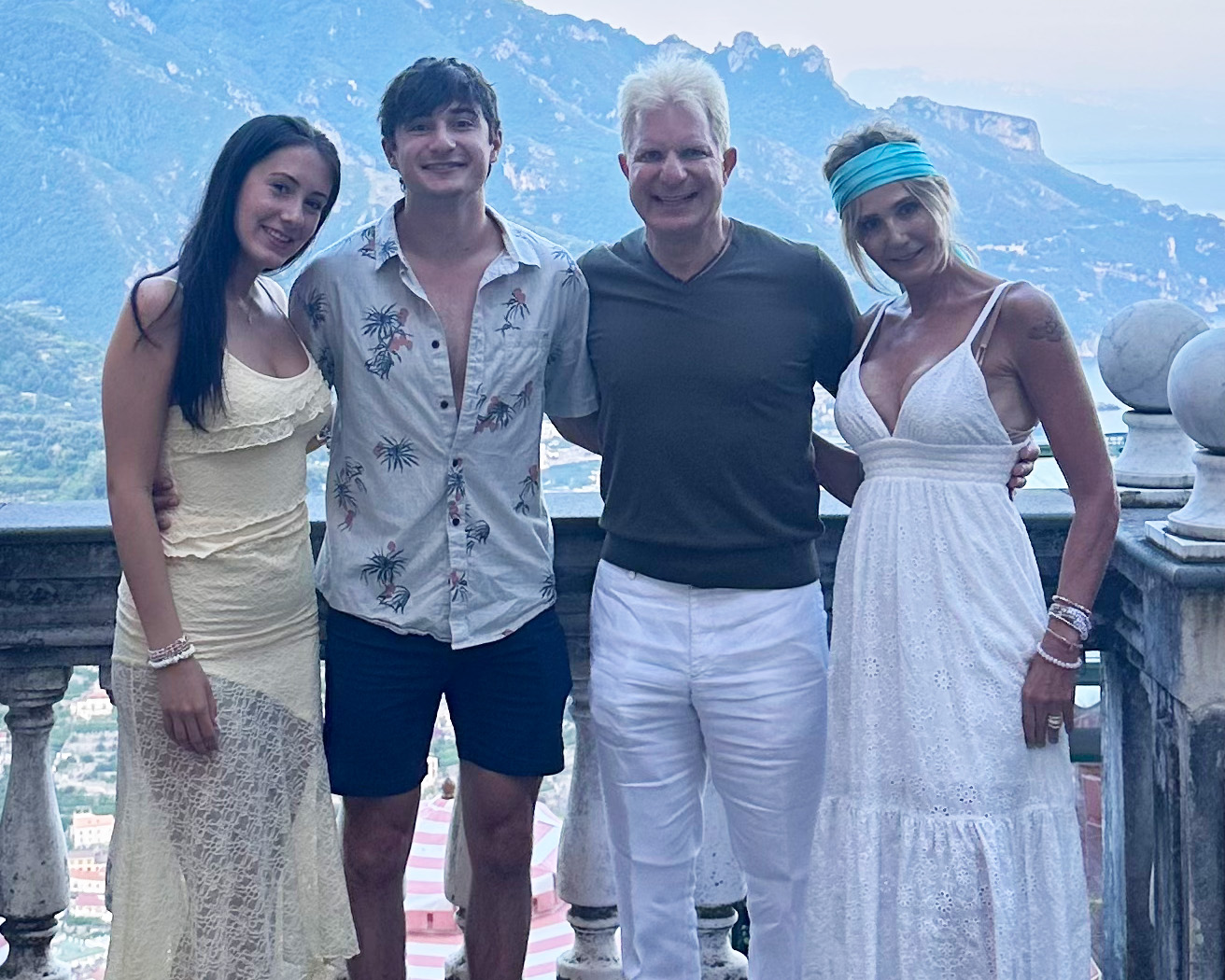

No Wrong Turn is my ongoing travel diary—as a KAX senior consultant, former expat, recent empty-nester, compression sock devotee, and proud breast cancer survivor. This isn’t a list of must-dos or scathing reviews. It’s just me, writing about the joyful, messy, occasionally chaotic magic of saying yes to more travel. Thanks for coming along. xoxo, Heather
This wasn’t just a trip. This was a long, slow burn of a crush—decades in the making.
I first fell for the Amalfi Coast while teaching at a tiny primary school off King’s Road in London, where my elementary-aged students would come back from half-term with magical tales about breathtaking cliffs, salty swims, and citrus-scented air. They spoke of gelato for breakfast, sun that turned your bones golden, and lemons the size of beach balls. I was quietly, thoroughly enchanted.
Since then, Italy and I have had flings—Rome, Sardinia, a lakeside situation up north—but Amalfi always slipped through the cobblestone cracks. Which is ridiculous considering how Italian-coded I am. My mom’s maiden name is Logozzo, for starters. My mother’s family is straight out of Sicily. And my dad? He’s been in a decade-long, monogamous relationship with his weekly Italian lessons. I once overheard him yell “Ma dai!” with such gusto on a Zoom call with his Italian pen pal that I thought someone had won the lottery. Spoiler: it was about pasta.
So yes, Italy lives in my bones. But this trip? This one finally stitched all the leather-bound daydreams together.
Once I mentioned my family and I going to Amalfi to Kyle, KAX Lifestyle’s founder and resident Italian coast whisperer, he was basically like, “hold my beer,” or more appropriately, “hold my Limoncello.” He didn’t just recommend—he curated. He loves Italy so much he’s become the unofficial maestro of the Mediterranean. From Pink Palace hotels with hidden martini bars, to family run restaurants we would have otherwise walked right past, every detail felt both effortless and intentional. It’s rare to feel known through a travel itinerary, but somehow, Kyle and the KAX team managed that magic.
So this is my Amalfi. Pull up a chair, pour something sparkling, and let’s begin.
Palazzo Avino: Elegance in Pink
It only feels right that I found myself floating through the rose-hued halls of the magnificent Palazzo Avino with Pink Pony Club on repeat in my AirPods. Call it serendipity, call it a vibe—but staying at what the locals affectionately refer to as “The Pink Palace” felt a little like starring in my own pastel-tinted music video. Except this version comes with terraced gardens perfumed by sun-kissed fruit, a cliffside pool, and a staff that somehow makes you feel both entirely spoiled and completely at home.
Let’s rewind for some historical flavor: Palazzo Avino started life in the 12th century as a private villa for an Italian noble family (because of course it did—this is Italy, after all). Centuries later, it was transformed into one of the Amalfi Coast’s most iconic luxury hotels. Perched high above the coastline in the sleepy village of Ravello, it’s a place that feels both suspended in time and effortlessly refined. There’s an elegance to every corner, but it never takes itself too seriously. Think marble floors and mosaic walls softened by velvet lounges, mirrored trays, and a quiet pink glow that hits differently at golden hour.
And let’s talk about those views. Cinematic swaths of sea and sky, like a vintage postcard come to life. From nearly every angle—your balcony, the pool deck, the terrace at Rossellinis—you’re met with a sweeping panorama of the Tyrrhenian Sea and the dramatic Amalfi cliffs. The kind of view that stops you mid-sentence. It’s not just beautiful—it’s breathtaking. And humbling. And grounding, like your soul just exhaled.
Today, the hotel is run by sisters Mariella and Attilia Avino, whose attention to detail borders on poetic. They didn’t just inherit a hotel—they inherited a legacy. And somehow, they’ve made it both softer and more extravagant at the same time. You’ll notice it immediately in the way the staff remembers your name, your breakfast spot, and how you like your morning pool chair setup. But it’s the micro-moments that stayed with me. Like how the entire property seems to carry notes of citrus and sun-warmed stone—thanks to the groves tucked into corners and climbing the garden walls. It’s Ravello, so yes, lemons are practically a religion here. But at Palazzo Avino, it becomes a signature scent and quite honestly, whole vibe of the setting itself. Even the simplest details at this hotel feel like a love letter.
{gallery}
The spa is carved beneath the main building like a little hideaway—a bit of Ravello’s natural stone mixed with five-star calm. There’s a Turkish steam bath, a sauna, a hydrotherapy tub, and a relaxation room that opens into the aromatic garden just outside. You can go from eucalyptus fog to Mediterranean flora and filtered sunlight in less than a minute. It’s all connected—physically, sure—but emotionally, too.
And if you're into sweating with a view (me), the outdoor gym might ruin all other workouts forever. Picture this: running on the treadmill while boats glide by below you, sea air brushing your face like a very luxurious motivational coach. It’s a flex in every sense.
And then there’s the martini bar. My personal playground. We sampled a few (for research, obviously): a creamy vanilla martini that tasted like Amalfi’s answer to dessert, a pink lemon drop that felt like a wink at my soundtrack of the week, and my forever favorite—a spicy dirty martini. Local olives, their brine kissed with jalapeño and a whisper of red pepper. It burned, it cured, it lingered. I’m still thinking about it.
And just beyond the hotel’s walls? Ravello itself—a tiny cliffside town that feels like it belongs in a Fellini dream. Ravello has been a quiet refuge for centuries, once a thriving maritime center under the Duchy of Amalfi in the 9th and 10th centuries. As trade routes shifted and neighboring Amalfi grew in prominence, Ravello became something else entirely: a serene escape. It has drawn artists, writers, and musicians for decades—Gore Vidal made it his home, and Wagner composed parts of Parsifal here. You’ll find stunning villas like Cimbrone and Rufolo with gardens that spill into the sky, churches with Byzantine mosaics, and stone alleys that feel almost too picturesque to be real. Even the piazza seems to hum with stillness. The pace is slow, the air clean, and the views so vast they feel like something ancient looking back at you. It’s not just beautiful—it’s transcendent.
Palazzo Avino isn’t just a hotel—it’s a mood. A color palette. A slow drip of beauty that somehow makes you feel like your most polished, playful self. A reminder that whimsy and elegance aren’t opposites—they’re soulmates. And they’re living their best life on a cliff in Ravello, beneath flowering vines, next to a grand piano that plays you to sleep.
Stay pink. Stay whimsical. Stay awhile.
Casa Angelina: Elegance in White
Some places try to impress you. Casa Angelina doesn’t have to.
We arrived in Praiano at Casa Angelina—tucked quietly between Positano and Amalfi—and were met not just with spectacular views, but with grace. A line of staff waited along the cliffside driveway, each offering a warm welcome like we’d been expected for months. Someone handed me a chilled glass of lemon and mint infused water. Another offered a scoop of house-made gelato—delicate, velvety, and so impossibly good it made conversation momentarily impossible. Within two minutes, I felt both grounded and transported. The tone was clear: this wasn’t going to be just a stay—it was going to be something softer, slower, better.
Casa Angelina is carved into the cliffs, and its design—modernist, minimal, and entirely white—was intentional from the start. Built in the early 1970s and completely reimagined into its current form, the hotel feels like a study in restraint. No excess. No noise. The walls are largely bare because nothing competes with the sea. Here, the view is the art. The sunlight shifts across the terrazzo floors and stark white walls like a moving gallery. The aesthetic is crisp but never cold—more "quiet museum" than "trendy boutique."
We came as a family, and somehow each of us slipped into our own version of calm. The service was impeccable, but never performative. Staff noticed without hovering. They remembered names, preferences, moods. One afternoon, after my third pass by the chocolate tray in the lobby, a team member slipped me a small parcel of her personal favorite sweets. Not because it was policy. Because it was thoughtful.
{gallery2}
And the details—they’re everywhere, but they never scream. Each day, a different fresh flower appeared in our room. Not arranged. Not fussy. Just placed. And each room came with a quiet collection of refined essentials to take home: a plush yet stunning beach tote in thick canvas, perfectly weighted flip-flops in a neutral palette, and a suite of generous-size, scented bath products that felt like they’d been designed just for you. Even the white sunglasses were elegant enough to feel curated, not branded.
The gym deserves its own moment. Floor-to-ceiling glass looks straight out onto the sea, making every workout feel cinematic. Treadmills face the water. Weights glint in the morning sun. A quant sauna next to a not-so-quant (huge, in fact!) cold plunge pool. It’s not just a place to exercise—it’s a place to reset, both body and mind. The kind of space that invites you in, quietly and completely.
And then there’s the restaurant. We dined at Seascape, the hotel’s open-air restaurant by the pool, where the sea feels just a breath away. We had dinner just after sunset, when the sky turns that soft lavender blue and the water below starts to mirror it. The lemon pasta—simple, perfect, kissed with the sharpness of Amalfi citrus—was one of those dishes I’ll think about years from now. The kind that makes you close your eyes between bites. Everything on the menu was elegant without being precious, with service that was graceful but never stiff. It was a meal, yes. But also a memory.
{gallery3}
And then—breakfast. It isn’t a meal, it’s a ritual. A hand-carved prosciutto station. Fried spaghetti. Local cheeses that belong in their own novella. House-churned butter and baked-to-order sfogliatelle that flake like snow. Even the scrambled eggs—so silky and delicate—stopped us mid-conversation. The kind of food that doesn’t ask for attention but earns it.
Casa Angelina has no need to shout. It whispers. It watches. It smooths the edges off your day. There’s a sense that everything here was thought through a hundred times, then simplified until only the essentials remained. Not basic—essential. There’s a difference.
Luxury here isn’t about gold fixtures or name-dropping. It’s about clarity. Light. Slowness. A hotel so intentionally curated, so quietly exquisite, that you leave feeling not just rested—but renewed. Seen.
Casa Angelina is the kind of place that stays with you not because it tries to—but because it knows exactly what it is.
Take your time here. You're exactly where you need to be.
Walking With the Gods: Not just a Hike
There are walks. And then there is il sentiero.
The Path of the Gods—Sentiero degli Dei—isn’t just a trail. It’s a three-hour, lung-opening, leg-burning, spirit-expanding journey through the wild elegance of the Amalfi Coast. Rugged and lyrical in equal measure. We walked it with Roberto, founder of Scala Experiences, who somehow made the ancient terrain feel not only accessible, but intimate—like being invited into a family story, centuries in the making.
The path begins just outside Casa Angelina. No shuttle, no staging area—just lace your boots, take a breath, and begin. Well, almost. First come the stairs: endless, uneven, sun-warmed stone steps that rise from the town into the cliffs. As the sound of the waves fades behind you, Praiano slips from view and the coastline opens, wide and blue and impossibly still.
Roberto met us with the kind of calm, generous energy that immediately put us at ease. Equal parts historian, naturalist, and neighbor, he led us through paths once used by monks, shepherds, and tradesmen journeying between Amalfi and Nocelle. Every few turns, he’d pause—not just so we could catch our breath (thank you, Roberto), but to point out what might otherwise go unnoticed.
Take the herbs. Wild fennel. Lemon thyme. Fresh mint. Oregano. Fig leaves. Something he called “mintle." But it wasn’t a botany lesson. He didn’t ask us to name them—he asked us how they made us feel. They say, “Memory lives in the nose." And it was true. Each scent pulled something to the surface. A place. A feeling. A warmth I couldn’t name but didn’t want to lose.
Halfway in, we reached the Church of Santa Maria del Castello—an ancient stone sanctuary tucked into the mountainside like it grew there. Timeworn but unwavering, it has welcomed pilgrims for centuries. Roberto told us it still hosts weekly services. We even met the priest, standing in the doorway as if waiting for someone exactly like us to come by.
Soon after, we followed Roberto off the trail a bit, to a small stone cottage. That’s where we met his friend Antonio.
Antonio is a goat shepherd. He welcomed us without fuss, and without a word of English—only a table set with what I can only call a feast: fresh goat cheese, still warm. Zucchini from his garden, sautéed in local oil. Bread baked that morning. Chestnut honey. Tomatoes so sweet they bordered on surreal. Homemade red wine.
As we were finishing this magical meal, Antonio stood, as I am told he often does after a few glasses of his local vino rosso, lifted his arms, and began to sing. No announcement, no ceremony—just his voice, full and raw, rising into the cliffs like it had always belonged there. The sound echoed through the valley, folding around us like sunlight. We clapped. We laughed. And then I looked at my husband, Jordan. I didn’t have to say a word—because in that moment, we both felt it. The beauty. The strangeness. The grace of being exactly where we were, held in something we couldn’t explain but didn’t want to end.
By the time we reached the end of the trail, our legs were heavy, but our hearts felt light. This hadn’t been a hike—it had been something else entirely. A thread pulled through time, tied with stories, passed along in herbs and honey, silence and song.
The Path of the Gods isn’t easy. It climbs. It narrows. It demands something of you. But with Roberto leading the way and Antonio’s voice still lingering in the air, it felt less like a challenge, and more like an offering. A piece of Italy we didn’t just see—we felt.
I Tried to Write About the Food on the Amalfi Coast. I Stopped. Here’s Why.
I set out to write about every restaurant we visited (all carefully recommend by Kyle and the KAX team). I really did. But somewhere between an espresso granita and a fifth plate of lemon-scented linguine, I realized: there’s no way to rank or write about meals when every single one feels like a revelation.
So instead of pretending I took notes or committed every chef’s name to memory, here’s the only advice that matters: when you’re on the Amalfi Coast, eat everywhere. Say yes often. Order what you don’t recognize. Let it surprise you.
Below is the full list of where we ate—and honestly, every single one was exceptional. I’d recommend them all without hesitation.
{gallery4}
My husband, Jordan, insists I mention his favorite: Donna Rosa. He loved it so much he finished his plate, stood up, walked straight into the kitchen, and hugged the chef. No hesitation. Then he sat back down and ordered the exact same dish again. Also finished it. No regrets.
That said, don’t be afraid to wander. Some of our favorite meals happened by accident. That trattoria with two tables and no printed menu? Go. The one hanging off a cliff where the waiter sang and the house wine kept flowing? Absolutely go.
Because food here isn’t simply nourishment. It’s a form of memory. A reflection of place. A slow, generous conversation between land, sea, and centuries of hands that have shaped what ends up on the plate.
The pizza is exactly as good as you imagine. The pasta—made by hand, never rushed—tastes like someone put their whole heart into it. The olive oil is so fragrant it might as well be bottled sunlight. And the fish? So fresh, you could swear it just swam past your table.
Dining on the Amalfi Coast is not a checklist. It’s a rhythm. A way of being. It’s sitting down for lunch and forgetting the time. It’s eating with both attention and abandon. So let the coast guide you. It knows what it’s doing.
1. Trattoria Da Lorenzo - About 8–10 minutes by car from Palazzo Avino, in Ravello Classic, unfussy, and full of heart. Expect house-made pasta, fresh seafood, and a warm, family-run atmosphere that feels like a local find (because it is).
2. Clubhouse by the Sea - Palazzo Avino’s private beach club in Marmorata, accessible via hotel shuttle A casual, al fresco lunch spot exclusive to hotel guests. Rosé, grilled catch-of-the-day, and lemon-scented air all included.
3. Terrazza Belvedere - On property at Palazzo Avino Perfect for a leisurely sunset meal or a midday aperitivo. Mediterranean flavors, sea views, and zero need to leave your lounge chair too early.
4. Lo Scoglio da Tommaso - Marina del Cantone, Nerano—often visited as a lunch stop during Capri or coastal boat days Legendary for its just-caught seafood and simple preparations. Expect lemon trees overhead, sea urchin pasta, and a very Italian sense of timing (i.e. long, lovely lunches).
5. Donna Rosa - Montepertuso (Upper Positano), ~25-minute drive from Casa Angelina Elegant, tucked-away, and family-run. Handwritten menus, deep wine list, and the kind of meal that makes you want to linger and listen to the hillside.
6. Ristorante Da Adolfo - Laurito Beach, accessible only by boat from Positano pier Yes, it’s real. Yes, it’s as charmingly rustic as they say. Look for the red fish boat at the marina. Swim or wade ashore, then eat grilled mozzarella on lemon leaves while your feet dig into the sand.
7. Da Vincenzo - Central Positano, short walk from Piazza dei Mulini A local institution that’s popular for good reason. Expect exceptional classics (the spaghetti alle vongole is famous), a lively crowd, and one of the most-poular dining experiences in town.


